Friday, 24 June 2016

Natural rememdies

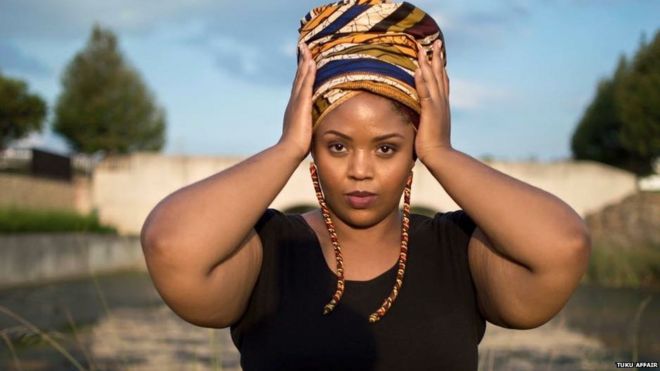
South African Poet Kgothatso Maditse
African women have worn headscarves for many years for religious, cultural reasons and even as a fashion statement but they were traditionally worn by older, usually married women.
They are a common feature in ceremonies such as weddings and even funerals.
Many also love the convenience of it - it can be a quick fix for a bad hair day.
And young African women are embracing the doek (in Afrikaans) or dhuku in Malawi and Zimbabwe.
One of the most popular forms of headscarves across Africa is the gele from West Africa. It can be incredibly elaborate and is usually starched so the material becomes stiff to hold its shape.
In Nigerian how a Yoruba woman wears her headscarf can be a sign of her marital status - if worn with the ends facing down its means a woman is married and if worn with the ends up, she is single.
Here in Southern Africa, there is a necessary debate about the dhuku in the corporate world.
A news reporter from an independent news channel trended on social media after it emerged that her story had been taken off air because she filmed it wearing a doek.
Cue social media storm.
The hashtags #RespekTheDoek  #RespekTheDhuku and #DoekTheNewsroom trended for a number of days here last week with many people - including men and even women from all racial groups - wearing a dhuku to show their support for the young journalist.
The channel, while explaining that its dress code does not allow on-air journalists to wear headgear to work, has said it is now reviewing that policy.
But many believe the channel's reaction showed how the workplace has not changed with the times.
Some say it shows an intolerance to black culture.
"We are, after all, in Africa where we have to be sensitive to everyone's culture and not just of those that don't wear dhukus," says one former entertainment writer.
"But don't forget that the workplace also insinuates that black natural hair is unprofessional. It seems looking African is unprofessional, which is rather ludicrous."
Kgothatso Maditse, a poet, agrees.
"It just goes to show just how far we are from accepting anything African if it doesn't have the 'right' stamp of approval. The longer we keep avoiding these topics, the longer we prolong and pacify an obviously stale way of thinking," she says.

'Good woman'


Image caption


My mother-in-law, who has been married for more than 40-years, wears it the same way.
For a while I had a love-hate relationship with the doek - it felt like a throwback to the past. It seemed like yet another way society was controlling how black women should look.
But a new generation of young women have now reclaimed the look - sporting a range of prints from all around Africa, they see the doek as an expression of what it is to be African.
And so I've grown to appreciate the delicate balance between ancient symbolism and modern identity - and made it my personal mission to celebrate its new-found power.
Kamogelo Seekoei, a Johannesburg writer, describes her headscarf as "a crown".
"Only a matriarch will know that a covered head means queen. We as black girls are out here celebrating our existence like never before," she says simply.
She says headscarves are a sign of "Queening" - a term used to refer to a social movement of black women from around the world who are embracing black beauty and power.

A selection of names for headscarves around Africa:
  • South Africa - Doek
  • Malawi/ Zimbabwe - Dhuku
  • Ghana - Duku
  • Nigeria - Gele
  • Sudan - Tarha
  • Sierra Leone - Enkeycha
  • East Africa (Swahili) - Kilemba
  • DR Congo (Lingala) - Kitambala
  • Rwanda/ Burundi - Igitambara
  • Uganda - Ekitambala (Luganda)/ Latam wich (Acholi)
  • Zambia - Chitambala 
  • From oppression to power
A number of high-profile African women are often pictured in elaborate headscarves, such as Liberian President Ellen Johnson-Sirleaf, African Union (AU) head Nkosazana Dlamini-Zuma and Winnie Madikizela-Mandela.
But the doek here is also rooted in racial politics.


Image copyright


The dhuku has become a popular fashion accessory among young Africans.  #VivianCollections

In South Africa, black domestic workers have worn it as part of their cleaning uniform for decades and it has served as a not-so-subtle reminder of that person's social standing.
It is a way of exerting control - an outward symbol of the gulf between servant and master.
This perhaps explains my reservations about headscarves at first.
Some say it is beginning to shed that image.
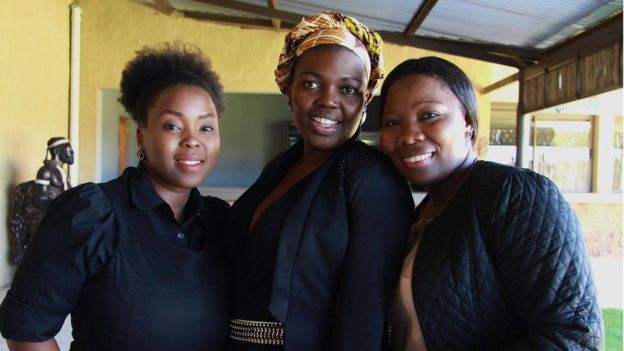


Kamogelo Seekoei (C) with friends in JohannesburgImage copyright
Image captionWearing a headscarf is also about convenience.                                                                #VivianCollections

"Africans are going through a state of being woke [awakened]. Africans are coming back to themselves," says Tumi Ndaba, the owner of Tuku Affair, a Pretoria-based company that sells headscarves from materials bought all over Africa.
"The doek never left, it was just worn in a way that wasn't really appealing us, but the more we fall in love with ourselves, the more we work harder at perfecting and beautifying everything that belongs to us," she tells me.
South Africa, whose constitution is rooted in celebrating cultural diversity, is growing up and its people are now more than ever using their voice and asserting their identity.
And so on days when I wear a doek (which is admittedly sometimes on bad hair days), I feel regal.
Like many young people here, I now wear it as a statement, to celebrate Africa - with all its flaws and beauty and its journey to finding itself.

Source: 

Tuesday, 21 June 2016

Ashley Graham Shows Off Cellulite Like It's No Big Deal (Because It Isn't)

Model Ashley Graham has made powerful moves toward greater body positivity in the fashion world—and she’s looked gorgeous every step of the way. Graham made body acceptance history earlier this year when she became the first size-16 model to rock the cover of the Sports Illustrated Swimsuit issue. While serving as backstage host at the 2016 Miss USA Pageant this month, she spoke out in favor of including more diverse women in the competition. She even walked in designer Christian Siriano’s first plus-size runway show. (Um, when does she sleep?)


Graham’s latest step towards body positivity is an Instagram photo reminding her followers that cellulite is NBD. The photo, shared yesterday, features Graham riding a bicycle in a cheerful purple dress, laughing and evidently having the time of her life. The picture also features her beautiful legs, complete with cellulite (which is very common and normal, by the way). In the photo’s caption, she wrote, “A little cellulite never hurt nobody. Stop judging yourself, embrace the things that society has called ‘ugly.'”
The post must have struck a chord with followers, because it has now received over 124,000 likes and countless uplifting comments. “You are an inspiration,” one commenter wrote. “The reason you’re so fabulous is because you’re brimming with confidence.” Another shared, “you help me be confident.” Others still just wanted to know where Graham’s fantastic dress is from. (So do we!) Take a look at the post below and get ready to feel inspired. The picture serves as a great reminder that whatever you look like right at this moment is perfectly gorgeous.
Her fans cheered her on, leaving comments like, “My hero,” “#preach,” and “What real women look like.” I guess you could say Graham puts the “model” in “role model.” And she’s not the only prominent voice calling for self-acceptance.
Body-image specialist Holli Rubin applauds Graham’s bold move, saying the model is “not only allowing her cellulite to show without covering it up and Photoshopping, but even … attempting to change followers’ views by highlighting what is usually deemed ugly and in need of being hidden.”
In April, comedian Amy Schumer slammed Glamour magazine for including her in its “Chic at Any Size!” issue focused on plus-size women. “I go between a size 6 and an 8,” she said on her Instagram. “Young girls seeing my body type thinking that is plus size? What are your thoughts? Mine are not cool glamour not glamourous.”
Recently, body-positive singer Meghan Trainor expressed her anger over having her waist digitally altered in her video “Me Too.” “I don’t know how [they] would shave my waist off,“ she told Robin Roberts on Good Morning America. “They made me skinnier than the dancers next to me.”

Thursday, 16 June 2016

Average Canadian house price rose 13% to record $509,460 in May

The average price of a Canadian home sold in May was $509,460, a 13 per cent increase in the past year and the highest figure on record.
The strong gains are largely tied to hot markets in Ontario and British Columbia, according to the numbers released Wednesday by the Canadian Real Estate Association.
Stripping those two markets out of the calculations, the average price of a house sold in May declined 0.7 per cent in the past 12 months, and sold for $310,007 in May.
After rising to a record sales volume the previous month, sales volumes fell sharply."Sales activity dropped in May from the previous month in about 70 per cent of all markets, led by those in British Columbia and Ontario where the number of homes listed for sale has fallen to multi-year or all-time lows," CREA said.
"There are housing markets where sales continue to reflect a cautious mood among homebuyers and uncertainty about the local economy," CREA president Cliff Iverson said.As has been the case for more than a year, the realtor group singled out hot markets in Toronto and Vancouver for skewing the numbers higher.The drop in sales and new listings in those cities are of grave concern for policymakers, because they could be a sign that high prices are convincing would-be buyers not to bother, and would-be sellers to stay where they are since they can't afford to move up after they sell.
The numbers for Vancouver are eye popping. According to CREA's house price index, housing costs in Greater Vancouver increased 29.7 per cent in the year to May, and in nearby Fraser Valley they were up 31.7 per cent.Both those figures are more than 17 times Canada's current inflation rate of 1.7 per cent."The warnings are piling higher on the Canadian housing market," is how Bank of Montreal economists Doug Porter and Robert Kavcic put it in a separate report on Canada's housing market on Wednesday.
"While record low borrowing costs are the most obvious factor behind lofty home prices, the fact that the surge in prices is so heavily concentrated in just two cities (and their environs) means that there are other important factors at play as well," BMO said.- ANALYSIS:
Why governments are terrified of popping the foreign buyer bubble Among the factors the bank cites are foreign buyers, who many watchers claim are driving prices out of reach. While BMO says more hard data is needed on the topic, the bank makes it clear that foreign money is a factor.
"Excess global savings sloshing around have driven many asset prices rocketing higher in recent years, and now that wave has washed upon Canada's biggest cities."Moreover, recent changes to downpayment rules requiring 10 per cent minimum up front will make it harder for locals to buy, while doing little to curb foreign buyers, the bank warns.The new rules "will simply crowd out the domestic buyer and leave the field wider open for foreign capital inflows."

Wednesday, 8 June 2016

Abolishing Tuition Fees: Lessons From Germany - Times Higher Education

More than a million young people will be enrolling in universities in England and Germany this autumn.
But in financial terms their experience couldn't be more different.
In Germany tuition fees have been abolished, while England has the most expensive fees in Europe, with every indication that they are likely to be allowed to nudge even higher.
But what difference does it make to their universities?
The Higher Education Policy Institute's director, Nick Hillman, has published an analysis - "Keeping up with the Germans?" - which looks at the impact of these contrasting funding systems.
The biggest difference is that a much smaller proportion of young people go to university in Germany.
In Germany, about 27% of young people gain higher education qualifications. In the UK, the comparable figure is 48%. The expansion in university entry in the UK has been one of those changes that has been so big that no one really notices.

Degrees of 'free'

But it would be wrong to think that the absence of fees means that the German system is starved of funding.
Germany spends a slightly higher proportion of GDP on higher education, there are more academic staff in German universities and Germany is significantly ahead in spending on research and development, both from public and private sources, investing 3% of GDP compared with 1.7% in the UK.
Tuition fees protestImage copyrightPA
Image captionWhile tuition fees were acrimoniously increased in England, they were scrapped in Germany
Students muttering about what had happened to their £9,000 might be relieved that spending per student is about 20% higher in the UK than in Germany.
In terms of quality, there are more UK universities at the top end of international league tables. But this is because league tables do not always include research institutes which do not teach or award degrees - and Germany has a much more distinct separation between teaching and research universities.
Report author Mr Hillman says that if the elite German science institute, the Max Planck Society, were included in global rankings it would overtake both Oxford and Cambridge.
The biggest difference seems to be not the outcome but the political decision about who pays. In Germany it's the taxpayer, in England the individual student gets the bill.
And that poses different types of question for what happens next.
Can the German university system afford to expand and produce more graduates under the current taxpayer-funded "free" model?

Value for money?

For the English system, the questions are for the students who have to pay. How much is too much? Even with a system of loans and deferred repayment, when do the costs outweigh the benefits?
University graduatesImage copyrightPA
Image captionFigures published this week showed that more than half of young women now enter higher education
Questions about value for money - and warnings about debts - have been recurrent since fees were introduced in the 1990s. They've risen in volume as fees have risen rapidly from about £1,000 to £3,000 and then £9,000.
While tuition fees have stolen the headlines, the biggest financial challenge for families might often be the low level of maintenance loans for living costs.
Adding to these money worries are stories about graduates who cannot get graduate jobs or who are unemployed.
A report from the Chartered Institute of Personnel and Development last month claimed that more than half of graduates were overqualified for their jobs. In contrast, the institute said that only 10% of German graduates were in non-graduate jobs.
But such anxieties about the cost of going to university tend to overlook the the cost of not going to university or getting high-level vocational skills.
Figures last week from the Higher Education Statistics Agency showed unemployment for graduates had fallen back to pre-recession levels, with 2.6% of graduates unemployed. Rising numbers of graduates did not mean more graduates without jobs.
There is no breakdown of graduate and non-graduate jobs, but 86% of graduates were satisfied with their careers.
The international evidence from organisations such as the OECD has remained steadfastly in favour of the financial benefits of higher education.
The economic think tank has argued that an increasing proportion of jobs will require high levels of skills and qualifications - and it rejects the idea that there is an over-production of graduates.

'Precariat'

The OECD has warned that the biggest risk is not to disgruntled graduates, but to young people with few qualifications competing for an evaporating pool of unskilled work.
In the US, the Pew research group highlighted that while graduates might have had a tougher time during the recession, the real losers were those with few qualifications.
The so-called "precariat" - those trapped in low-skilled, low-pay, insecure jobs - might not get the same attention as under-employed graduates, but they are the other side of this polarisation of the workforce.
While such economic viewpoints tend to take an overview of the labour market, for individuals it's about personal ambitions and family aspiration, rather than percentages.
And in the UK there has been a seemingly irresistible rise in demand for university.
Despite the surge in tuition fees in England, this week's figures on higher education participation show no sign of a reduction in demand.
These latest figures show 47% of people entering higher education in England, up from 43% the year before. Among young women, the proportion is 51%. It's now an expectation for a majority of young women.
Don't expect the arguments about value for money to go away, but don't expect any fall in demand for places.

Saturday, 4 June 2016

Live and Learn: First Time Home Buyers Beware

The American dream has many facets, but one of the most enduring is the idea of a home of one's own, with or without a white picket fence. 
Owning a home was certainly a part of Claudia Azula–Altucher's plan when she came to the United States from Argentina by way of Venezuela. She had grown up under a military regime but decided early on that she wanted a different life. She came, she said, "to follow my dream of being here in the United States; half-running, half because I wanted to eat pizza."


Pizza was not even the half of it. Azula–Altucher obtained a college education and eventually landed a job as an information technology manager for a law firm. And then, she said, "I wanted to have my own house. It was part of the American dream, having my house."

Azula–Altucher found a house she loved, but it was a stretch financially, and it turned out to be a bit of a money pit.
As soon as she bought it, she said, "every penny I made went into the house so I had no money to eat, just money to go to work, eat whatever I cooked, and then every weekend I was in my house fixing things."
Even as she became adept at home repair, Azula–Altucher was racking up debt, and soon she had no financial wiggle room. Then, in 2009, she lost her job. With five months' severance and ongoing mortgage and car payments, Azula–Altucher was in trouble.

Rent or Buy A Home?What Millennials Should Know:


First time homebuyers like Azula–Altucher are often surprised by the true costs of home ownership, from necessary repairs to ongoing maintenance. A study by real estate site Zillow found that, on average, homeowners pay more than $6,000 a year on unavoidable hidden costs like homeowner's insurance, property taxes and utilities.
In addition, many people are currently making smaller down payments when they buy homes, so they have less flexibility to adjust their finances to accommodate life's ups and downs.
Some 27 percent of homebuyers purchased homes with down payments of 3 percent or less in the first quarter of 2015, according tomarket research firm RealtyTrac, the highest share in nearly two years. And the 14.8 percent average down payment in the first quarter of 2015 was the lowest since the first quarter of 2012. (Azula–Altucher said her down payment was less than 10 percent of the $250,000 she paid for her home.)
Homebuyers' finances have improved since the financial crisis: In 2013, at nearly all income levels, fewer of them were devoting more than 30 percent of their income to housing costs, according to the Joint Center for Housing Studies of Harvard. But even so, more than 20 percent of homeowners with incomes between $45,000 and $74,999 were in that group, as were nearly 10 percent of those with incomes of $75,000.
Small wonder, then, that Census Bureau data indicated that the rate of home ownership in the third quarter of 2015 was just 63.7 percent, down from 64.4 percent a year earlier, while renting continues to become more common.
Azula–Altucher got lucky. As her severance was about to run out, she received an offer for the house. She has since married, and her husband helped open her eyes to other types of employment possibilities. She began writing self-help books, and their success enabled her to pay off her debts.
Azula–Altucher and her husband have no plans to buy a home, however. "I don't want to buy a house," she said. "I want to rent because I realize maintenance is a lot of work, there are hidden fees, taxes can go up and I'd rather spend all that energy writing and using my talent rather than worrying about a house.
If you've learned a valuable financial lesson that you would like to share, please email us at Vivian Collections 

Thursday, 2 June 2016

Pocket Money At Nine-Year High Amid Gender Gap

Children are getting an average of $12.37 a week in pocket money but the gap is widening between the earnings of boys and girls. 

Pocket money has hit a nine-year high but the gender gap is growing, with sons receiving almost 12% more than daughters. The Halifax survey of nearly 1,800 children aged eight to 15 and their parents found that they now receive $15.00 a week on average.. 

Boys received an average of $13.08 per week, compared to girls who got an average of $11.62. 

Despite getting more, boys were also more likely to complain that they were not getting enough - 44% said their parents should pay them more, compared to 39% of girls. 
There was also a gender gap last year but it was just 2%. ONS figures show that the gender pay gap for adults is 9.4%, based on the median earnings of full-time employees. 

The average pocket money payment reached $15.80 (£8.37) in 1987 and fell slightly to just over $15.10 (£8) in 2007 but, when the financial crisis hit in 2008, weekly childhood earnings plummeted to an average of $11.57 (£6.13). 

The bank found that nearly 80% of current youngsters are saving some of their pocket money, with nearly one in eight saving all of it. 

Giles Martin, head of Halifax Savings, said: "It's reassuring to see that the average weekly amount has reached a nine-year high. 
"Some parents are clearly not feeling the pinch in the same way as they have done in recent years, when weekly pocket money dipped as low as $11.12 (£5.89).  

"It's likely it'll be a few more years until we reach the dizzy heights of $15.80 (£8.37) in 2005 though, when we saw the highest average pocket money since our records began." 

London children enjoyed the highest average pocket money rate of $15.50 (£8.21), up 7.3% on last year, while children in East Anglia received an average of just $9.36 (£4.96), down 11.9% on last year. 

Scottish children had the second-highest rate of $13.33 (£7.06), while children in the South East earned $12.89 (£6.83) a week and those in the North West got an average of $12.61 ( £6.68). 
NB: The dollars are in Canadian money :-) 

Sunday, 29 May 2016

Controversial Theories of Child Discipline

Traditional versus Western models of child discipline:

Although the use of traditional or corporal punishment to discipline children has been argued for centuries, a thorough understanding of whether and how corporal punishment affects children has not been reached. There are many models of child discipline but lets talk about these three:

Traditional, Western and Biblical Models.  


  1. Traditional Child Discipline. There is an old African saying that "It takes a village to raise a child". If my child breaks the rules, uncles, aunties or the elders of the village are legally and morally allowed to discipline them. In my experience this has effectively worked for my generation because there have been limited adverse issues of crime and immorality compared to my children's generation who are growing in the western culture. Traditional models bring wholesome fear and maturity. This is the fear with a positive quality that ultimately enriches and nourishes our lives, it could be argued. The above video reflects the controversy between western and traditional ways of child discipline where some immigrant parents struggle to adapt to the western culture, which in this case has reflected flaws. The children's services remove the child from parents and dismally fail the child whose case got worse as she got pregnant and abused while under social services care. Furthermore, parents ended up carrying the can to help the depressed teen mother and the social services are no longer to help the child as intended. Could these be some of the failed policies of the western child discipline approaches?


                2.  The western culture believes that discipline is the process of teaching children the values and normative behaviours of their society. It is the guidance of children’s moral, emotional and physical development, enabling them to take responsibility for themselves when they are older. It helps children become aware of the boundaries of what is acceptable and unacceptable behaviour, what is right and wrong, and how to relate to the world around them. Discipline emphasizes teaching and the consequences of actions. Positive discipline normally involves helping children to understand why certain behaviours are unacceptable and other behaviours are acceptable. In this view parents are authoritative guides and supporters on the path to maturity, not generals commanding the course of growth by using corporal punishment. Examples encouraged includes: time out, talking, removal of regular incentives, cafew, limiting bad associations, "Bad company corrupts good character" (1 Corinthians 15:33).

3. Biblical Child Discipline: Removing biblical prayer in schools has increased social problems in our societies.
The removal of bible prayer in public schools by the supreme court in USA had negative moral impact in today's societies. My argument is that prayer would not eliminate criminal problems but at least it would reduce them. For example in June 25, 1962, the United States Supreme Court decided in Engelv. Vitale that a prayer approved by the New York Board of Regents for use in schools violated the First Amendment because it represented establishment of religion. In contrast,  in 1963, in Abington School District v. Schempp, the court decided against Bible readings in public schools along the same lines. So we need to realize that these actions do have consequences, when we remove that moral fiber - that moral emphasis – this is what can result.

• Academic achievement plummetes
• Increased rate of out-of-wedlock births
• Increase in illegal drug use
• Increase in juvenile crime
• Deterioration of school behavior